
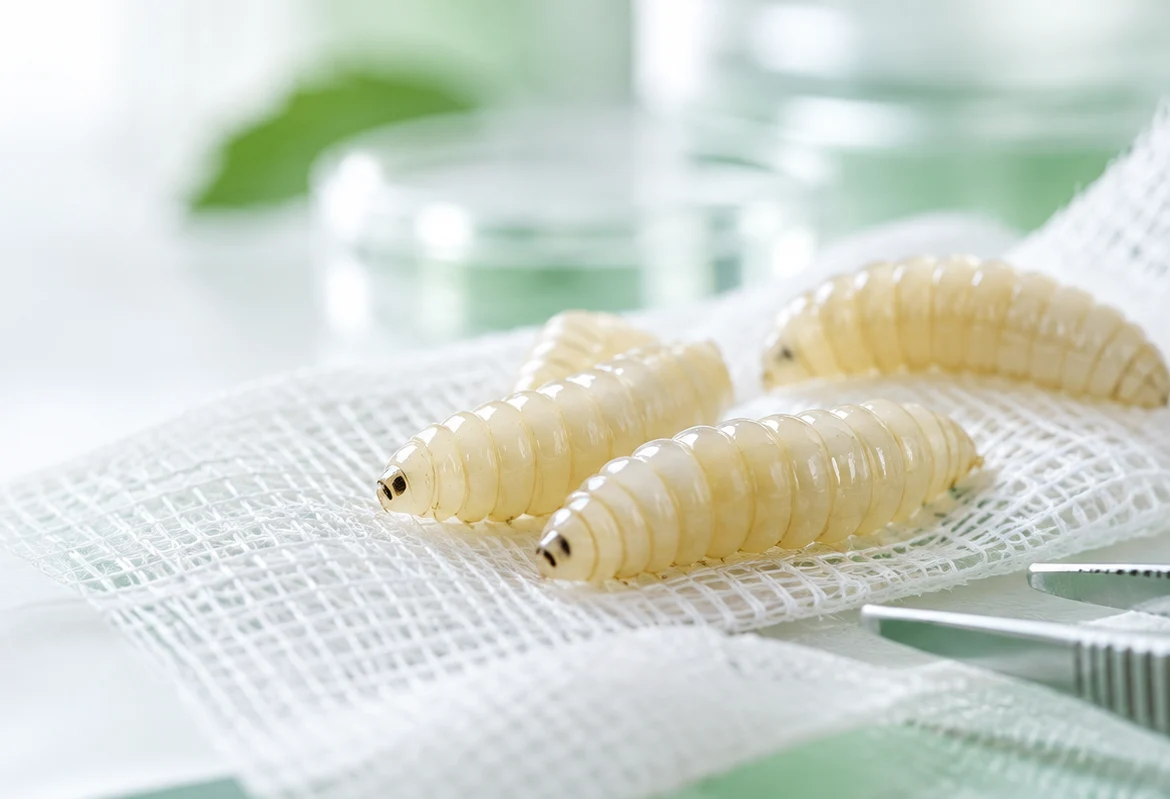
What is MDT?
Maggot debridement therapy (MDT), also called larval therapy, uses medicinal fly larvae to remove dead tissue from selected wounds. The important word is debridement: removing non-viable tissue is not the same as completely healing a wound. FDA classification
What happens during care?
A clinician assesses the wound and discusses whether this approach fits the person's care plan. When it is appropriate, a clinical product is used with a dressing that contains the larvae. The team monitors treatment, removes the dressing and reassesses the wound. This is a general description, not an application protocol. Patient information
A treatment option, not a universal solution
A therapy can perform well at one task without being the best choice for every person. The useful question is not simply whether maggot therapy works. It is what goal the care team is trying to achieve, what the alternatives are, and what risks matter for this particular wound.
What does the evidence say?
In the VenUS II trial of leg ulcers, larvae removed dead tissue faster than hydrogel, but did not improve the rate of healing; participants receiving larval therapy reported more ulcer-related pain. Those results should not be generalized to every wound or every treatment setting. Original trial
Begin with a conversation
Ask your clinician what is preventing the wound from improving, whether debridement is needed and how progress will be measured. Discuss comfort, follow-up and how to reach the team between visits. You do not need to choose a product before arranging an assessment.
Never collect or apply household or wild maggots to a wound. This resource does not diagnose wounds, prescribe treatment or replace a licensed clinician.
Sources & further reading
Follow the original source for complete details and subsequent updates.