
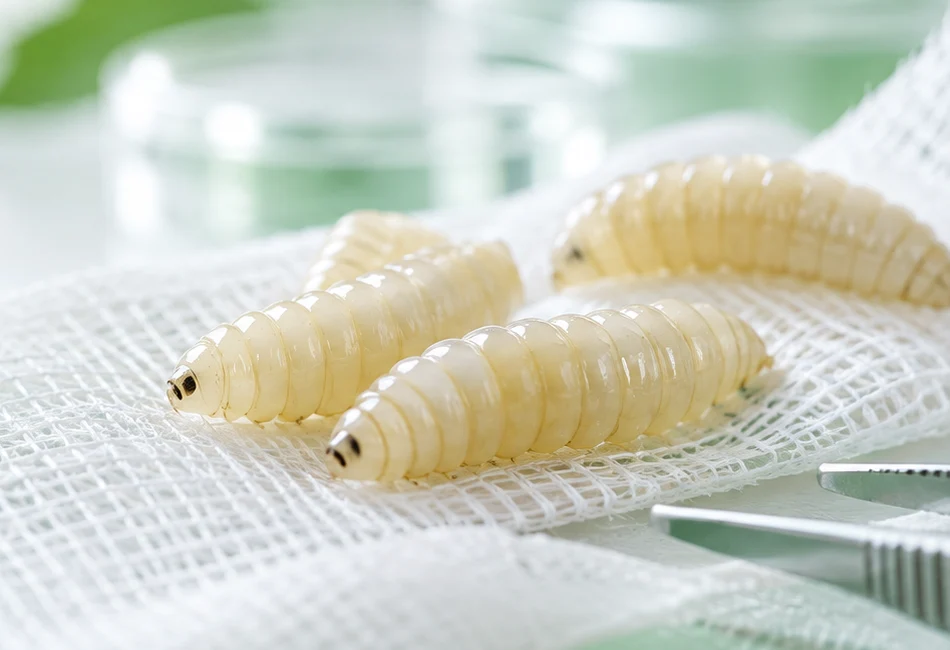
Similar appearance does not establish medical suitability
The phrase “medical maggots” describes a controlled medical supply and use, not simply an insect that happens to be in a wound. FDA's classification refers to disinfected larvae supplied for a defined debridement purpose. That distinction is why photographs or a species name cannot establish that larvae obtained elsewhere are appropriate for care. Read the FDA entry.
This page is not a guide to collecting, breeding, cleaning, or substituting larvae. There is no home-preparation method offered here. The practical information for a patient is the identity of the prescribed product and the team responsible for its use.
A product-identity checklist
Ask the care team for the exact product name, the supplier, and the patient information for that product. Write the information down rather than relying on an image search. Ask which clinician or service is responsible for placing an order, receiving it, applying treatment, checking progress, and removal. These are separate responsibilities even when one service handles them all.
For a professional comparing suppliers, keep a record of the manufacturer document, its version, the country it covers, and the date checked. Do not use an old blog entry as an ordering specification. Our industry source guide separates manufacturer links from independent evidence and explains the questions to take to a supplier.
Product information and effectiveness information serve different purposes
A manufacturer is a primary source for what it says it makes. A regulator is a primary source for its own record. A published study is a source for the intervention evaluated in that study. These are not interchangeable endorsements.
For example, a study using one treatment format does not establish that a different supplier's product has the same evidence. Conversely, finding a manufacturer's name in a database does not tell you that the product is available in your location today. Treat identity, regulatory status, supply, and suitability as four separate fields in your notes.
Language that deserves a closer look
“Natural” describes an origin, not a complete safety assessment. “Sterile” or “disinfected” should be read in the context of the actual labeling rather than used as a general reassurance. “Medical grade” should lead to an identifiable supplier and product information, not end the inquiry. “FDA registered” is not the same wording as a product-specific clearance or approval; open the relevant record rather than relying on a badge.
These distinctions are especially useful when a page uses dramatic before-and-after photographs. Ask what product was used, whether the photograph is a real case, what other treatment occurred, and what outcome was recorded. When those details are unavailable, the image cannot answer a product-quality question.
When larvae are found unexpectedly
An unplanned finding is not evidence that a wound is receiving therapeutic care. Contact an appropriate healthcare professional for assessment instead of treating the finding as beneficial, attempting to identify larvae from this website, or allowing a planned appointment to be delayed. We do not offer an image-identification or removal service.
Prepare the conversation without collecting sensitive information
The care-call planner lets you choose questions about referral, product information, appointment logistics, and follow-up. It does not transmit those selections to this website. Use the clinic's own approved channels for any medical records it requests. Ordinary website contact forms should not be used to send wound photographs, diagnoses, or copies of prescriptions.
If a product page appears misleading, save its address and the particular statement that concerns you. Send a source correction to the publisher without including patient information. A useful correction identifies the wording and the underlying record; it does not need an entire personal medical history.
Sources & further reading
Follow the original source for complete details and subsequent updates.